

Doon Law MentorGet Free eBook →
JKPSC Civil Judge Prelims • Paper B Preparation Guide

J&K Civil Judge
Paper B Strategy 2027

A structured preparation approach for CPC, Registration, Transfer of Property, GFR, J&K Service Regulation, subordinate-court rules, High Court circulars and current tenancy law.

Use this page to convert a rule-heavy syllabus into provision maps, authority tables, PYQ-driven revision and timed Paper B practice.

2027 preparation • Prevailing JKPSC Paper B framework • Current-law checked 23 September 2026

Paper BObjective / MCQ screening paper
225 Marks • 2 HoursPrevailing JKPSC prelims framework
7 Syllabus ComponentsCentral civil laws • rules • J&K-specific material
Reviewed by Ashish Jain Sir Founder, Doon Law Mentor
Official framework

Paper B at a Glance

Under the latest available JKPSC Civil Judge syllabus, the Preliminary objective type / screening test uses Paper A and Paper B. Paper B carries 225 marks and is allotted 2 hours. The official syllabus dated 21 August 2025 presently identifies seven Paper B components. No official subject-wise question allocation is prescribed in that syllabus.

ObjectiveMultiple-choice / screening paper
225Maximum marks for Paper B
2 HoursTime allowed for the paper
¼ PenaltyOne-fourth of marks assigned to a wrongly answered question
General Financial Rules, 2017 J&K Service Regulation, 1956 — Chapters III–XIII, XXII–XXIII Subordinate Courts Rules & High Court Circular Orders Code of Civil Procedure, 1908 Registration Act, 1908 Transfer of Property Act, 1882 Tenancy enactment named in prevailing JKPSC syllabus
Paper B / Paper II nomenclature

The recruitment/syllabus framework uses Paper A and Paper B. JKPSC’s recent previous-paper archive displays the actual prelims papers as Paper-I and Paper-II. This guide uses Paper B consistently as the preparation term.

Official references: JKPSC syllabus portal · Civil Judge syllabus notice · J&K PSC Conduct of Examinations Rules, 2022 · JKPSC Judicial previous-paper archive

App Exclusive Benefits

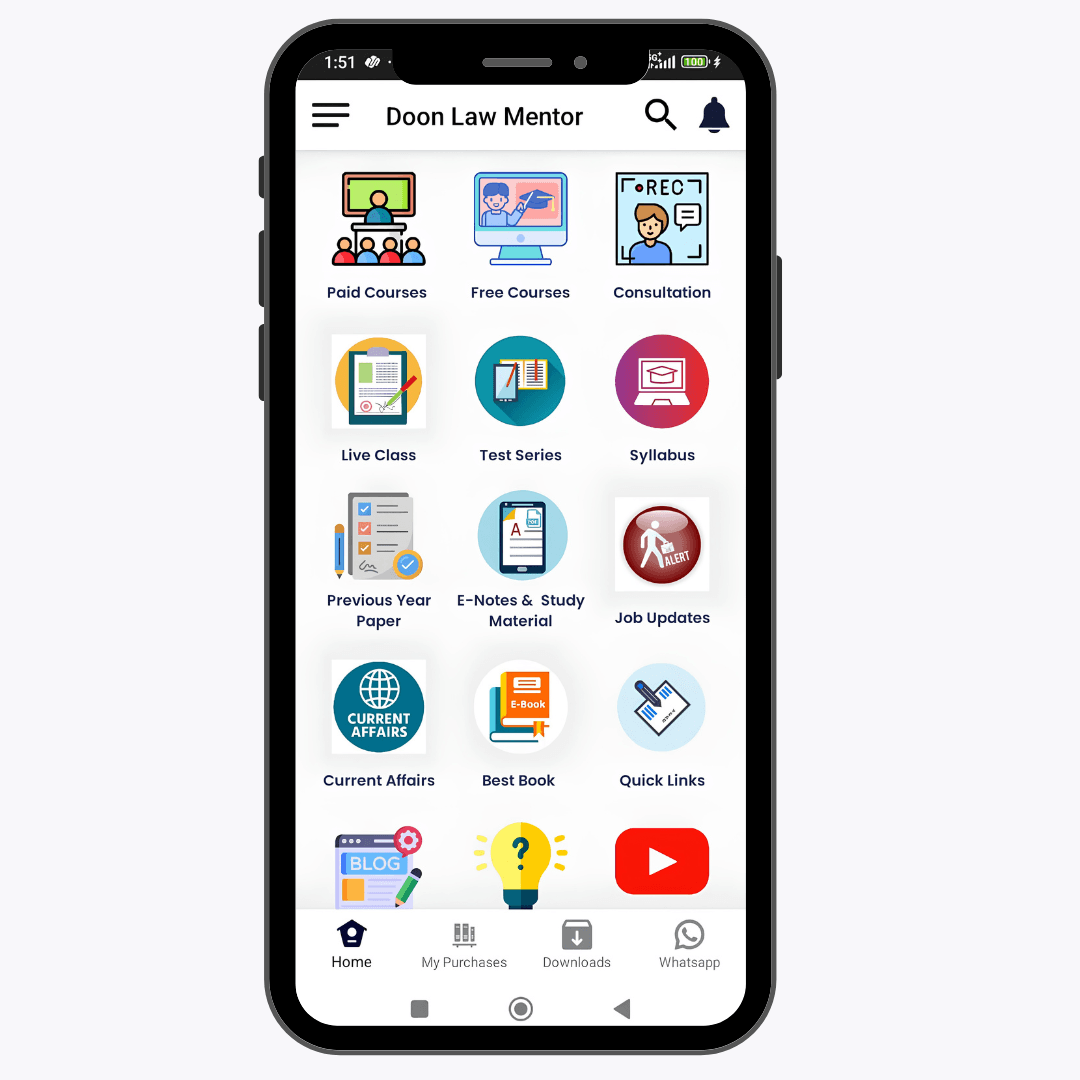
Prepare Smarter on the Doon Law Mentor App

Get an app-exclusive discount, free J&K Judiciary resources, classes, notes, tests and important preparation updates — all in one place.

App-Exclusive DiscountCoursesTest SerieseBooks & Notes
App-exclusive coupon code
DLMAPPUse inside the DLM App
Get it on Google PlayDownload on the App Store
DLM preparation analysis

Why Paper B Requires a Different Preparation Method

Paper B combines major central civil statutes with financial/service regulations, court-administration material and J&K-specific law. That combination changes the preparation method: a student who is comfortable with CPC or TPA can still lose marks through authorities, rule numbers, chapter limits, provisos, timelines or local procedural material. This is a Doon Law Mentor preparation observation, not an official JKPSC difficulty or scoring classification.

Statute + rule-book reading

CPC, Registration and TPA reward conceptual structure; GFR, Civil Service Regulations and court material require closer rule-book recall.

Authority precision

Many rule-heavy questions turn on who may sanction, order, register, present, approve or exercise a particular power.

Local-law updating

J&K-specific material must be checked against current enactments, notifications and High Court/government sources rather than static notes.

Subject-wise roadmap

Paper B Subject Priorities — Quick Strategy

Use these subject-wise accordions as a quick preparation map for all seven Paper B components. They show what to prioritise, how to read the governing source, common MCQ traps, PYQ usage and revision focus. Detailed preparation sections for each major Paper B component follow below.

General Financial Rules, 2017 Strategy

Source / scope

Use the official Government of India General Financial Rules, 2017 and the current official compilation/amendments. Avoid learning monetary limits from undated notes.

What to study first

Map chapters and basic definitions, then move through general financial principles, expenditure control, procurement/contracts, inventory/assets and grants/financial procedure.

Preparation priority

Build rule familiarity before attempting dense MCQ sets. Know where a rule sits and which authority or process it governs.

Rule-book method

Mark definitions, mandatory language, competent authority, approval stages, exceptions and amendment-sensitive provisions.

Common MCQ traps

Outdated thresholds, near-identical procurement terms, authority confusion and learning an old amendment as the current rule.

PYQ integration

Tag every GFR PYQ by rule/theme and verify the proposition against the current official compilation before adding it to your notes.

Revision method

Use chapter maps, authority/action tables and a short rule-number error list. Recheck changeable thresholds from the current source.

Last-revision focus

Definitions, general principles, procurement/contract flow, grants, authority-based rules and the provisions you repeatedly confuse.

J&K Civil Service Regulations, 1956 Strategy

Source / scope

The latest JKPSC Paper B syllabus limits this component to Chapters III to XIII, XXII and XXIII. Prepare that notified coverage rather than reading the entire regulation indiscriminately.

What to study first

Create a chapter map and identify the subject of each prescribed chapter before learning individual articles/rules.

Preparation priority

Definitions, service conditions, competent authorities, pay/leave/service matters within the prescribed chapters, provisos and recurring exceptions.

Rule-book method

For each provision record: chapter → rule/article → authority → condition → exception → consequence.

Common MCQ traps

Reading outside the notified chapters, confusing similar service concepts, missing provisos and using superseded rule notes without checking amendments.

PYQ integration

Classify questions by chapter and error type. A wrong authority or exception should become a separate recall card.

Revision method

Maintain one page per prescribed chapter with article/rule anchors, authorities and high-confusion distinctions.

Last-revision focus

Chapter boundaries, frequently confused provisions, authority tables and amendments/current text relevant to prescribed chapters.

Subordinate Courts Rules & High Court Circular Orders Strategy

Source / scope

Use the prescribed Rules and Orders for the Guidance of Subordinate Courts (Civil and Criminal) and relevant circular orders issued by the High Court, supported by the High Court’s official rules/orders repository.

What to study first

Separate Civil and Criminal material, then build topic folders for court-office procedure, processes, registers, records, administrative instructions and authority-based directions actually contained in the prescribed material.

Preparation priority

Focus on rule/order structure, responsible authority, procedural requirement, record/register and exceptions rather than relying on broad summaries.

Rule-book method

Convert each important rule/circular into “who → does what → in which situation → subject to what condition”.

Common MCQ traps

Mixing Civil/Criminal instructions, assuming general CPC/BNSS procedure answers a local court-rule question, and learning circular numbers without the proposition.

PYQ integration

When a PYQ tests a local procedural point, locate the governing rule/order in the official material and add it to an authority/topic index.

Revision method

Use rule/order maps organised by function: process, records, registers, administrative control, reporting and court-office duties.

Last-revision focus

Authority-based questions, procedural distinctions, frequently repeated local instructions and the exact rule/order proposition—not just its number.

Code of Civil Procedure, 1908 Strategy

Source / scope

Prepare the CPC through its Sections and First Schedule Orders/Rules, keeping substantive procedural principles connected to the relevant Order.

What to study first

Jurisdiction, res sub judice/res judicata and core Sections first; then parties, pleadings, summons, interim relief, execution and appellate/review/revision architecture.

Preparation priority

Sections vs Orders, procedural sequence, court powers, maintainability conditions, appeal/review/revision distinctions and commonly confused Orders/Rules.

Bare-act method

Read connected Section + Order together where appropriate. Mark provisos, explanations, deeming clauses and time-sensitive steps.

Common MCQ traps

Confusing section and order sources, mixing appeal/review/revision, overlooking conditions for stay/interim orders and remembering procedure without sequence.

PYQ integration

Classify CPC PYQs by procedural stage and add every wrong answer to a “Section / Order / Rule” correction sheet.

Revision method

Use litigation-flow charts: institution → pleadings → process → issues/evidence → judgment/decree → execution → challenge.

Last-revision focus

Jurisdiction, res judicata/sub judice, pleadings, parties, interim relief, execution, appeals/review/revision and high-confusion Orders.

Registration Act, 1908 Strategy

Source / scope

Use the current statutory text and applicable amendments. Prepare the Act as a sequence from registrability to presentation, registration/refusal and legal effect.

What to study first

Compulsory vs optional registration, then time/place of registration, presentation and persons entitled to present.

Preparation priority

Effect of registration/non-registration, refusal and remedies, books/records, presentation requirements and procedural distinctions.

Bare-act method

Pair every procedural requirement with the person/authority, time, place and consequence of non-compliance.

Common MCQ traps

Confusing compulsory/optional documents, presentation vs admission of execution, time limits and consequences of non-registration.

PYQ integration

Tag PYQs as document-type, presentation, time/place, refusal/remedy or effect; revise the controlling provision immediately.

Revision method

Use a transaction-to-registration flow and a short compulsory/optional/effect comparison sheet.

Last-revision focus

Registrability, presentation, time/place, refusal/remedies and legal effect.

Transfer of Property Act, 1882 Strategy

Source / scope

Prepare both general transfer principles and transaction-specific chapters directly from the bare act.

What to study first

General principles first, then sale, mortgage, lease, exchange, gift and actionable claims.

Preparation priority

Ostensible owner, feeding the grant, lis pendens, fraudulent transfer, part performance, transaction definitions, rights/liabilities and statutory exceptions.

Bare-act method

Use paired comparison sheets for closely related concepts and transaction types. Keep ingredients, exceptions and legal consequences together.

Common MCQ traps

Mixing doctrine ingredients, confusing sale/mortgage/lease consequences, treating exceptions as general rules and missing conditions in section text.

PYQ integration

Map each question to doctrine/transaction and identify exactly which ingredient or exception produced the correct option.

Revision method

Alternate general doctrines with transaction chapters; use comparison cards for mortgage types, lease/gift issues and doctrine conditions.

Last-revision focus

Core doctrines, mortgages, leases, gifts, part performance, lis pendens and the distinctions you repeatedly miss.

J&K Tenancy Law Strategy — Syllabus & Current-Law Transition

Official syllabus position

The latest available JKPSC syllabus still names the Jammu and Kashmir Residential and Commercial Tenancy Act, 2012.

Current statutory position

The Jammu and Kashmir Tenancy Act, 2025 came into force on 15 February 2026 and repealed the 2012 Act, subject to the statutory savings for pending cases/proceedings. The J&K Tenancy Rules, 2026 were subsequently notified.

What to Prepare for 2027

For 2027 preparation, keep two reference points separate: the wording of the latest available JKPSC syllabus and the tenancy law currently in force. Prepare the J&K Tenancy Act, 2025 and the applicable 2026 Rules as current law, while checking the next official JKPSC notification or syllabus for any formal change in the prescribed wording.

Primary-source method

Use the 2025 Act, commencement notification and 2026 Rules alongside the latest JKPSC syllabus notice. Keep a one-page transition note separating syllabus wording from current law.

Common MCQ traps

Treating the repealed 2012 Act as current law, or the opposite error—claiming the 2025 Act is already named in JKPSC’s syllabus when the prevailing official syllabus has not yet been updated.

PYQ integration

Older tenancy questions should be tagged by concept and then checked against the current statutory regime before being used as 2027 revision material.

Revision method

Maintain two columns: “latest JKPSC syllabus wording” and “current statutory law”. Update only when an official JKPSC or government source changes.

Last-revision focus

Current Act structure, authorities, tenancy framework, possession/eviction, adjudication, schedules/forms/rules and the syllabus-transition note.

Rule-heavy subject

General Financial Rules, 2017 — Preparation Architecture

GFR preparation should be version-controlled. The Department of Expenditure currently provides a consolidated General Financial Rules, 2017 compilation updated through 31 January 2026. Candidates should also check subsequent official amendments and circulars issued after that compilation date, particularly for amendment-sensitive rules, procurement conditions and monetary thresholds. Do not carry an old threshold or amended rule forward without checking the latest official source.

StructureKnow the chapter map before trying to memorise rule numbers.
AuthorityIdentify who may sanction, approve, procure, accept or regularise.
ProcessConvert procurement, contracts, grants and expenditure control into ordered steps.
Current versionMark amendment-sensitive rules and recheck thresholds from official compilations.
Practical GFR rule

Do not create a permanent memory card for a monetary threshold until you have checked that the figure remains current. Learn the controlling rule and source date together.

Open the consolidated GFR 2017 compilation updated through 31 January 2026 →

Check subsequent Department of Expenditure circulars and GFR amendments →

Continue Your J&K Judiciary Preparation

Choose Your Next Step

Start with free updates and resources, test your current preparation, or move to complete Prelims–Mains–Interview guidance.

2

J&K Judiciary Test Series

Attempt the free first mock and assess your preparation with exam-style Paper A and Paper B questions.

Attempt First Mock Free →
3

J&K Judiciary Complete Course

Structured preparation for Prelims, Mains and Interview with current-law and J&K-specific coverage.

Explore Complete Course →
Looking for a specific subject, test or revision resource?Explore All J&K Judiciary Courses →
Exact JKPSC chapter limit

J&K Civil Service Regulations, 1956 Strategy

The latest JKPSC Paper B syllabus expressly limits this component to Chapters III to XIII, XXII and XXIII. That boundary should shape both first reading and revision. Do not spend scarce revision time treating the entire regulation as equally prescribed unless a later JKPSC syllabus changes the scope.

Chapter map first

Write one line for the subject of every prescribed chapter, then attach the most important articles/rules to that map.

Authority + exception

For each service provision record the competent authority, condition, exception/proviso and practical consequence.

Amendment discipline

J&K service regulations have been amended over time. Keep the regulation text and official amendment trail ahead of old classroom charts.

View J&K Civil Service Regulations — official High Court source →

Study the J&K Civil Service Regulations chapter-wise for Judiciary 2027 →

Local procedural material

Subordinate Courts Rules & High Court Circular Orders

This component deserves independent preparation because its source material is institutional and procedural rather than a single central statute. Start by separating Civil and Criminal material, then organise rules/circulars by function instead of reading them as an undifferentiated compilation.

Civil / Criminal splitKeep the two streams visually separate in notes and error logs.
AuthorityIdentify which court, judge, officer or office function is responsible.
Procedure / recordGroup process, registers, records, reporting and court-office requirements.
Circular updatesUse High Court-issued material; do not treat an old coaching summary as the controlling source.

Open the High Court of J&K and Ladakh Acts, Rules, Orders & Guidelines page →

Core civil procedure

CPC Strategy: Build Procedure, Not a Random Order List

Sections vs Orders

Know whether the governing proposition comes from a Section, an Order/Rule, or an interaction between the two.

Procedural sequence

Institution, parties, pleadings, summons, issues, interim relief, judgment/decree, execution and challenge should form one connected process map.

High-confusion clusters

Res sub judice/res judicata, appeal/review/revision, execution, temporary injunctions and party/pleading provisions should be revised in paired distinctions.

Limitation interaction

Where a CPC remedy or procedural step interacts with limitation, keep the procedural provision and the relevant limitation principle cross-referenced. Do not merge the two statutes into one rule.

Transaction-to-registration flow

Registration Act, 1908 Strategy

The Registration Act becomes easier when studied as a process rather than as isolated sections: identify the document → ask whether registration is compulsory/optional → determine time/place → presentation/person → execution/admission → registration/refusal → remedy/effect.

RegistrabilityCompulsory vs optional registration and document classification.
PresentationWho may present, where, within what statutory framework.
Refusal / remedyKeep registering-officer powers and statutory remedies distinct.
Legal effectRevise effect of registration/non-registration together with relevant property transactions.
Doctrine + transaction

Transfer of Property Act, 1882 Strategy

TPA preparation should alternate between general doctrines and transaction-specific chapters. This prevents a common problem: remembering the label of a doctrine or transaction while missing its statutory conditions and exceptions.

General principles

Ostensible owner, feeding the grant, lis pendens, fraudulent transfer and part performance—learn ingredients and exceptions.

Transaction chapters

Sale, mortgage, lease, exchange, gift and actionable claims should be revised through definitions, rights/liabilities and statutory distinctions.

Comparison practice

Use paired charts only after reading the bare act: mortgage types, sale vs agreement, lease issues, gift conditions and doctrine differences.

Authority update

J&K Tenancy Law — Current Law + Syllabus Transition

Current-Law Update

JKPSC Syllabus Reference and the Current Tenancy Law

Latest available JKPSC syllabus: Paper B still names the Jammu and Kashmir Residential and Commercial Tenancy Act, 2012.

Current law: The Jammu and Kashmir Tenancy Act, 2025 (Act No. IV of 2025) was published in the J&K Official Gazette on 1 November 2025 and came into force on 15 February 2026. Section 47 repeals the 2012 Act while saving cases and proceedings pending at commencement, which continue under the repealed Act as provided by the savings clause.

Rules: The Jammu and Kashmir Tenancy Rules, 2026 were notified under S.O. 189 dated 2 July 2026 and came into force on publication in the Official Gazette.

For 2027 preparation: The latest available JKPSC syllabus continues to name the Jammu and Kashmir Residential and Commercial Tenancy Act, 2012, while the J&K Tenancy Act, 2025 and the J&K Tenancy Rules, 2026 form the current statutory framework. Until JKPSC publishes a fresh recruitment notification or revised syllabus, candidates should understand both positions separately. Any formal change in the prescribed syllabus should be taken from a new official JKPSC document.

How to prepare the current tenancy law

Structure & tenancy informationMap definitions, tenancy information/agreement framework, schedules and prescribed forms.
Landlord / tenant frameworkRevise rights, obligations, rent, maintenance and possession-related provisions.
Rent AuthorityIdentify statutory role, powers, applications and procedural links.
Rent Court / TribunalMap adjudication, appeal/procedure and execution architecture provided by the Act/Rules.

Official current-law sources: J&K Law Department Acts index · J&K Official Gazette — Tenancy Act, 2025 · Commencement notification · J&K Tenancy Rules, 2026

Study the J&K Tenancy Act, 2025 for Judiciary 2027 →

Repeatable Paper B method

How to Study Rule-Heavy Paper B Subjects

For GFR, Civil Service Regulations, subordinate-court material and circular orders, use the same seven-step extraction method. The goal is to turn dense rule text into a recall structure without disconnecting memory from context.

StructureLocate chapter/topic first.
AuthorityWho exercises the power?
RuleWhat is the governing proposition?
ExceptionWhen does the rule not apply?
TimelineIs a period or sequence prescribed?
PYQHow has the proposition been framed?
RecallCan you retrieve it both ways?
Output to produce

For each rule-heavy source, maintain a chapter map, authority/action table, timeline sheet, exception list and one-page final recall sheet. If the same error repeats in MCQs, add it to the final sheet; do not endlessly expand notes.

Memory system

How to Memorise Rules, Provisos and Exceptions

Active recall

Close the source and retrieve the rule, authority and exception before checking. Rereading alone creates familiarity, not reliable recall.

Two-way recall

Practise “rule number → result” and “result → rule number”. Number recall should reinforce the legal proposition, not replace it.

Exception-first revision

On later revision rounds, start with provisos, exceptions and authority/timeline traps because these are often where similar options diverge.

Spaced revision: return to the same compact sheet at increasing intervals and retest weak entries. Pair closely related rules instead of memorising them in isolation.

DLM Analysis

How to Use PYQs for Paper B

Start with the most recent Paper II, then move backwards. DLM’s subject classifications are analytical groupings for preparation and are not official JKPSC subject weightage.

Classify by source

Tag every question as CPC, Registration, TPA, GFR, Civil Service Regulations, court rules/circulars or tenancy.

Classify the error

Separate concept errors from authority, rule-number, proviso, timeline and current-law errors.

Update older material

Where local law or a rule has changed, use the older question to test the concept and verify the current legal position separately.

Paper B error log

Record source → rule/proposition → error type → correct answer basis → next revision date. Local-law and authority errors should remain separately taggable so they do not disappear inside a generic “wrong answer” list.

See the complete J&K Civil Judge Previous Year Papers & PYQ Analysis →

Paper B progression

Paper B Revision Cycle

Primary SourceRead statute/rule/current text.
Rule MapStructure authority, rule and exception.
MCQsExpose confusion and weak recall.
PYQsAdapt to JKPSC framing.
Error LogTag concept/rule/authority/timeline errors.
RetestReturn to repeated weak areas.
Rapid RevisionUse only final maps and marked sources.
Adaptable 30-day framework

30-Day Paper B Revision Framework

This is a revision framework, not a promise or fixed timetable. Adjust the volume to your starting level and available hours, but keep all seven syllabus components alive throughout the month.

Days 1–10

Primary-Source Pass

  • Rotate CPC/TPA with GFR and Civil Service Regulations.
  • Keep Registration and court rules/circulars in recurring shorter blocks.
  • Build the tenancy syllabus/current-law transition note.
  • Produce chapter/rule maps rather than long fresh notes.
Days 11–20

Rule Maps + Sectional MCQs

  • Use authority, timeline, proviso and exception tables.
  • Take statute-wise and local-rule tests.
  • Retest Civil Service Regulations/GFR errors within a few days.
  • Continue tenancy-law current-source revision.
Days 21–26

Paper II PYQs + Mixed Practice

  • Attempt recent Paper II under controlled timing.
  • Classify every error by source and error type.
  • Mix central-law and rule-heavy questions in the same session.
  • Revisit High Court/local material that repeatedly causes uncertainty.
Days 27–30

Rapid Revision + Full Mocks

  • Use only marked sources, chapter maps and error sheets.
  • Run full timed Paper B practice and review all guesses.
  • Recheck current-law updates and amendment-sensitive rules.
  • Avoid starting new large compilations.
Testing strategy

Paper B Mock-Test Strategy

Statute-wise tests

Use CPC, Registration and TPA tests to isolate conceptual/provision gaps before mixing them.

Local-law / rule tests

Test GFR, Civil Service Regulations, court material and tenancy through authority, exception, timeline and rule-number tagging.

Full Paper B mocks

Practise switching between central civil law and rule-heavy local material under one clock, then analyse every wrong and low-confidence answer.

Explore J&K Civil Judge Prelims Test Series →

Attempt discipline

Negative Marking & Paper B Decision-Making

Under the J&K PSC Conduct of Examinations Rules, 2022, one-fourth of the marks assigned to a question is deducted for a wrong answer; if more than one answer is marked it is treated as wrong, while an unanswered question carries no penalty.

Exact-rule confidence

Attempt confidently when the source, authority or provision is clear.

Reasoned elimination

Use authority, proviso, exception or procedural sequence to eliminate options—not vague familiarity.

Obscure-rule guess

If you cannot identify a legal/rule basis and are effectively guessing, remember that wrong answers carry a penalty while blanks do not.

Avoidable errors

Common Paper B Mistakes

Preparing only CPC and TPA while neglecting GFR, Civil Service Regulations and court material.
Postponing rule-heavy subjects until the final week.
Reading summaries without the controlling statute/rule source.
Failing to distinguish competent authorities and procedural roles.
Ignoring the JKPSC chapter limit for J&K Service Regulation.
Memorising the 2012 tenancy law as current law without checking the 2025 transition.
Assuming JKPSC has formally substituted the 2025 Act when its prevailing syllabus still names the 2012 Act.
Ignoring High Court circular/order material because it is less familiar than central statutes.
Learning rule numbers without the legal proposition, authority or exception.
Solving PYQs without classifying why the answer was wrong.
Using outdated GFR thresholds or amended provisions from old notes.
Taking mocks without retesting repeated authority/timeline errors.
Final-week review

Last-Week Paper B Checklist

GFR chapter map, amendment-sensitive rules and authority/procurement points revised.
J&K Civil Service Regulations Chapters III–XIII, XXII and XXIII revision sheets completed.
Subordinate-court Civil/Criminal material and High Court circular/order notes revised.
CPC Sections/Orders, execution and challenge provisions revised.
Registration Act compulsory/optional, presentation, refusal/remedy and effect revised.
TPA doctrine and transaction comparison traps revised.
Tenancy syllabus wording vs current 2025 Act / 2026 Rules transition note checked.
Authority and timeline tables revised across rule-heavy subjects.
Provisos/exceptions and major rule/section confusion pairs retested.
Latest Paper II PYQ reviewed with error classification.
Paper B error log reduced to a final high-priority list.
Full mock review completed, including guesses and elimination errors.

Use recent Paper II PYQs to diagnose Paper B gaps

Classify errors by statute, rule, authority, timeline and current-law issue, then revise the governing source.

Open J&K Civil Judge PYQ Analysis →
Student questions

J&K Civil Judge Paper B FAQs

What subjects are included in J&K Civil Judge Paper B?

The latest available JKPSC syllabus lists General Financial Rules 2017; J&K Service Regulation 1956 (Chapters III–XIII, XXII and XXIII); Rules and Orders for the Guidance of Subordinate Courts (Civil and Criminal) and High Court circular orders; CPC 1908; Registration Act 1908; Transfer of Property Act 1882; and the Jammu and Kashmir Residential and Commercial Tenancy Act, 2012.

Is Paper B the same as Paper II?

The syllabus/recruitment framework uses Paper A and Paper B. JKPSC’s recent previous-paper archive labels the actual prelims question papers as Paper-I and Paper-II. For preparation, Paper B corresponds to the second prelims paper framework.

How should I prepare General Financial Rules for JKPSC Civil Judge?

Use the current official GFR compilation, build a chapter map, then create authority/action, process and exception tables. Verify amendment-sensitive monetary thresholds from the current official source rather than memorising undated figures.

Which chapters of J&K Civil Service Regulations are prescribed?

The latest available JKPSC syllabus specifies Chapters III to XIII, XXII and XXIII of the Jammu and Kashmir Service Regulation, 1956.

How should I prepare subordinate-court rules and High Court circulars?

Separate Civil and Criminal material and organise it by authority/function: processes, records/registers, court-office procedure, administrative directions and relevant circular orders. Use official High Court material as the controlling source.

How should I prepare CPC for Paper B?

Link Sections with relevant Orders/Rules and study CPC as a procedural sequence. Give special revision attention to jurisdiction, res judicata/sub judice, pleadings/parties, interim relief, execution and appeal/review/revision distinctions.

What tenancy law should I study for J&K Judiciary 2027?

For 2027 preparation, distinguish the latest JKPSC syllabus wording from current law. The prevailing syllabus still names the 2012 Residential and Commercial Tenancy Act, while the J&K Tenancy Act, 2025 has since come into force and the 2026 Rules have been notified. Study the current law and monitor JKPSC’s next official syllabus for any formal update.

Does the official syllabus still mention the 2012 Tenancy Act?

Yes. The latest available JKPSC Civil Judge syllabus dated 21 August 2025 still names the Jammu and Kashmir Residential and Commercial Tenancy Act, 2012. That is separate from the current statutory position after commencement of the 2025 Act.

How should old Paper II PYQs be used after changes in J&K tenancy law?

Use older questions to identify the concept and examiner framing, then verify the answer against the law that is currently in force and the latest JKPSC syllabus wording. Do not carry an old statutory proposition forward automatically.

Is there negative marking in Paper B?

Yes. Under the J&K PSC Conduct of Examinations Rules, 2022, one-fourth of the marks assigned to a question is deducted for a wrong answer; an unanswered question carries no penalty.

How should I revise Paper B in the final month?

Keep all seven components active. Move from primary sources to rule maps, sectional/mixed MCQs, recent Paper II PYQs, an error log and then rapid revision. Balance CPC/TPA with GFR, Civil Service Regulations, court material, Registration and tenancy law.

Primary references

Official Sources & Preparation Basis

JKPSC — Civil Judge (Junior Division) syllabus portal

JKPSC — Civil Judge syllabus notice dated 21 August 2025

J&K PSC (Conduct of Examinations) Rules, 2022

JKPSC — Civil Services (Judicial) previous-question-paper archive

Department of Expenditure — consolidated GFR 2017 compilation updated through 31 January 2026

High Court of J&K and Ladakh — Acts, Rules, Orders, Guidelines & Protocols

J&K Law Department — State Acts index

J&K Law Department — Notifications / S.O. index

Source & Copyright Note: Official rules, syllabus notices and question papers referenced on this page are published by JKPSC or other competent public authorities and are linked to their official sources. Doon Law Mentor does not claim ownership of those official materials. The preparation framework, subject strategies, tables, checklists, explanations and commentary on this page are independently prepared by Doon Law Mentor for educational guidance.

Next step

Prepare the Complete J&K Judiciary Syllabus

Doon Law Mentor

J&K Judiciary Complete Programme

Live + Recorded preparation for Prelims, Mains and Interview, with J&K-specific coverage and structured guidance.

Explore Complete J&K Judiciary Programme →Explore J&K Civil Judge Prelims Test SeriesView All J&K Judiciary Courses