

Doon Law MentorGet Free eBook →
JKPSC Civil Judge PYQ Resource • Updated for 2027 Preparation

J&K Civil Judge
Previous Year Question Papers

Official and verified J&K Civil Judge Prelims and Mains previous-year papers with paper-wise links, trend analysis and preparation guidance for 2027.

Start with the official papers, then use the analysis framework below to convert every PYQ into a revision and mock-test decision.

Official archive years verified: 2025 • 2023 • 2018 • 2017 Mains

Verified Years2025 • 2023 • 2018 • 2017 Mains
PrelimsPaper I and Paper II official sets
MainsOfficial compulsory/optional paper bundles
Reviewed by Ashish Jain Sir Founder, Doon Law Mentor
Quick download centre

Verified J&K Civil Judge Previous Papers

The JKPSC judicial-question-paper archive lists Civil Services (Judicial) papers for 2025, 2023, 2018 and 2017 Mains.

Source note

All papers listed below are linked to JKPSC’s official question-paper archive or official JKPSC PDF host.

2025Prelims
Paper I
Official JKPSC PDF
Open paper PDF →
2025Prelims
Paper II
Official JKPSC PDF
Open paper PDF →
2025Mains
Compulsory & Optional Papers
Official JKPSC PDF
Open paper PDF →
2023Prelims
Paper I
Official JKPSC PDF
Open paper PDF →
2023Prelims
Paper II
Official JKPSC PDF
Open paper PDF →
2023Mains
Compulsory & Optional Papers
Official JKPSC PDF
Open paper PDF →
2018Prelims
Paper I
Official JKPSC PDF
Open paper PDF →
2018Prelims
Paper II
Official JKPSC PDF
Open paper PDF →
2018Mains
Compulsory & Optional Papers
Official JKPSC PDF
Open paper PDF →
2017Mains
Compulsory Papers I–VI + Optional Papers I–VI
Official JKPSC archive listing
Open official archive →

Open JKPSC Civil Services (Judicial) Previous Question Papers archive →

App Exclusive Benefits

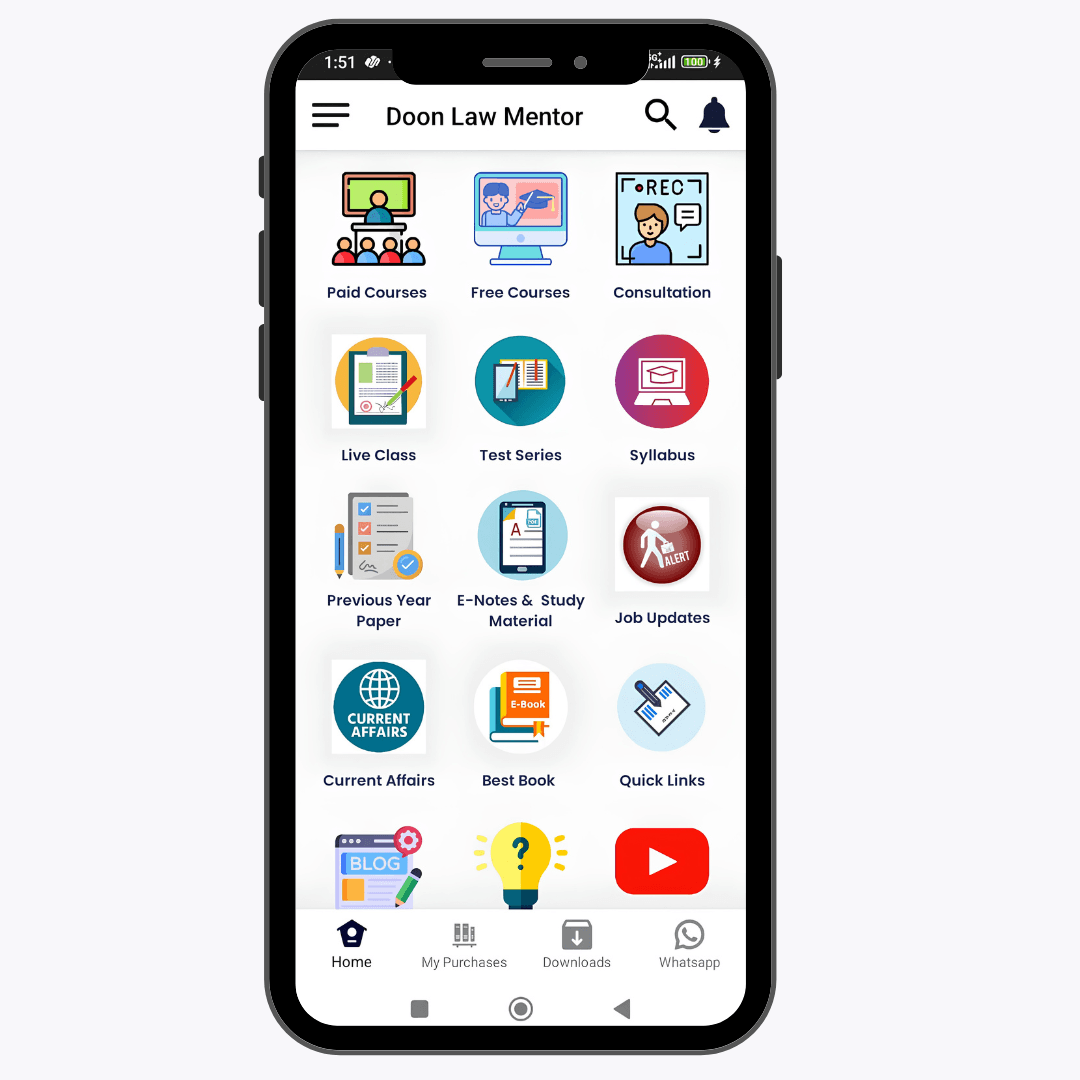
Prepare Smarter on the Doon Law Mentor App

Get an app-exclusive discount, free J&K Judiciary resources, classes, notes, tests and important preparation updates — all in one place.

App-Exclusive DiscountCoursesTest SerieseBooks & Notes
App-exclusive coupon code
DLMAPPUse inside the DLM App
Get it on Google PlayDownload on the App Store
Use the papers as data

Why PYQs Matter for J&K Civil Judge 2027

Recurring subjects

PYQs reveal which syllabus areas repeatedly deserve revision time. Do not treat a syllabus heading and an examined question as the same thing—mark what was actually asked.

Question framing

Notice whether JKPSC asks direct bare-act recall, concept application, institutional/public-law knowledge, procedural distinctions or issue-based descriptive answers.

Local-law emphasis

Use Paper II and the Mains bundles to identify J&K-specific provisions and local legal frameworks that need separate bare-act revision.

Depth expected

A paper shows whether surface familiarity is enough or whether the examiner expects exceptions, provisos, definitions, procedural sequences and precise legal language.

Bare-act dependency

Every wrong answer should be traced back to the governing provision. Over time, the error log shows which statutes need fresh bare-act passes.

Time management

PYQs become most useful when attempted under the same time pressure as the examination and reviewed immediately after completion.

Year-wise papers

What Each Verified Examination Year Gives You

2025 — Prelims Paper I, Paper II and Mains

JKPSC’s official judicial-paper archive lists all three 2025 resources. This is the most recent paper set listed in the official archive and is particularly important for 2027 preparation because the examination took place after the 1 July 2024 commencement of BNS, BNSS and BSA.

Paper I →   Paper II →   Mains bundle →

2023 — Prelims Paper I, Paper II and Mains

The 2023 official set is a crucial pre-new-codes benchmark. Use it for question style, conceptual testing and civil/local-law practice, while treating IPC/CrPC/Evidence Act wording as historical where the law has since changed.

Paper I →   Paper II →   Mains bundle →

2018 — Prelims Paper I, Paper II and Mains

The 2018 official set adds an older comparison point. Paper I includes general knowledge and public-law/constitutional-institution questions alongside the wider notified syllabus, showing the breadth of preparation required.

Paper I →   Paper II →   Mains bundle →

2017 — Mains papers listed in the official archive

JKPSC’s official archive lists Compulsory Papers I–VI and Optional Papers I–VI. Use the official archive link to access the available papers.

Open official JKPSC archive →

Turn PYQ gaps into targeted practice

After two timed PYQ attempts, move repeated weak areas into sectional tests and then full-length mocks.

Explore Prelims Test Series →
Prelims analysis

Prelims Paper I Trend Analysis

Doon Law Mentor’s question-by-question classification of the official 2023 and 2025 Paper I sets provides a useful pre-/post-new-codes comparison. The table below presents the resulting raw question counts.

Subject area2023 Paper I2025 Paper I
General Knowledge / Current Affairs1612
Constitutional Law2421
Limitation511
Substantive criminal lawIPC — 20BNS — 19
EvidenceIndian Evidence Act — 17BSA — 18
Criminal procedureCrPC — 18BNSS — 18
Mixed / unclassified—1

DLM Analysis: The counts above are based on Doon Law Mentor’s question-by-question classification of the official JKPSC papers. Subject categories are analytical groupings and are not official JKPSC classifications.

Continuity across the transition

Doon Law Mentor’s analysis of the official 2023 and 2025 papers shows substantial weight for criminal law, evidence and criminal procedure. The statutory source changes, but the examiner continues to test precise rule knowledge and application.

What changed for 2025

Paper I moved from IPC/CrPC/Evidence Act to BNS/BNSS/BSA. That makes 2025 the most useful current-code benchmark, while 2023 remains valuable for concepts that survive after mapping to the new enactments.

For 2027

Start with 2025, then solve 2023 with a current-law mapping sheet. For every old-code question, record the modern BNS/BNSS/BSA provision only after verifying the text and legal effect.

Continue Your J&K Judiciary Preparation

Choose Your Next Step

Start with free updates and resources, test your current preparation, or move to complete Prelims–Mains–Interview guidance.

2

J&K Judiciary Test Series

Attempt the free first mock and assess your preparation with exam-style Paper A and Paper B questions.

Attempt First Mock Free →
3

J&K Judiciary Complete Course

Structured preparation for Prelims, Mains and Interview with current-law and J&K-specific coverage.

Explore Complete Course →
Looking for a specific subject, test or revision resource?Explore All J&K Judiciary Courses →
Prelims analysis

Prelims Paper II Trend Analysis

Paper II shows a strong civil-procedure, property/registration and J&K rules/local-law orientation. The table below compares Doon Law Mentor’s question-by-question classification of the official 2018 and 2025 Paper II sets.

Subject area2018 Paper II2025 Paper II
Civil Procedure Code3415
Registration1012
Transfer of Property1211
Service Regulations / CSR1315
Financial rulesJ&K Financial Code — 13GFR — 15
Court / subordinate-court rules4Civil Rules — 9; Criminal Rules — 10
Tenancy / rent lawOld Rent Control — 8Tenancy — 13
Right of Prior Purchase6—

DLM Analysis: The counts above are based on Doon Law Mentor’s question-by-question classification of the official JKPSC papers. Subject categories are analytical groupings and are not official JKPSC classifications.

Stable preparation pillars

Doon Law Mentor’s analysis of the official Paper II sets shows that CPC, Registration, Transfer of Property and service/financial rules remain central preparation areas, even though the distribution and local-law framework change over time.

Local-law caution

Older Paper II questions cannot be reused mechanically. Rent, local statutory and court-rule questions must be checked against the law and rules applicable to 2027 preparation.

Mains PYQs

Mains Previous-Year Paper Analysis

The JKPSC archive lists Mains bundles for 2025, 2023 and 2018, and separately lists 2017 Compulsory Papers I–VI and Optional Papers I–VI. Across these years, the J&K Judicial Mains structure uses multiple compulsory and optional papers.

Compare issue framing

Track whether a question demands explanation, distinction, application, drafting, interpretation or a reasoned legal conclusion. Mains preparation should reproduce that demand—not merely the topic heading.

Compare answer depth

Use the marks and wording on the paper to decide how much statutory detail, case law, exception/proviso treatment and factual application the answer needs.

Compare optionals carefully

Do not infer that every optional bundle is relevant to your chosen subjects. Filter each year by the optionals you are actually preparing and build a separate PYQ file for each.

Subject-wise distribution

Use Qualitative Coding Before Percentages

Reliable subject-wise percentages require complete question-level classification of each paper. The framework below can be used to classify PYQs consistently.

Code each question forWhat to record
SubjectConstitution, criminal law, civil procedure, property/registration, local law, general awareness, language or other relevant syllabus area.
Statute / sourceExact Act/rule/regulation and, after verification, the governing section or rule.
Question typeDirect bare-act recall, definition, exception/proviso, limitation, application, case principle, institutional knowledge or descriptive analysis.
ResultCorrect / incorrect / guessed / too slow.
Recurring high-yield areas

Recurring Areas in Doon Law Mentor’s Analysis of Official PYQs

Evidence / BSA

Dying declaration, discovery, estoppel, expert opinion and witness examination repeatedly matter as concepts. For 2027, use old Evidence Act questions only after mapping them to the BSA position.

Criminal procedure

Doon Law Mentor’s analysis of the official papers identifies FIR, bail, remand, cognizance, police statements, victim compensation and plea bargaining among the repeatedly tested procedural themes.

CPC

Res judicata/res sub judice, pleadings, execution and appellate/revisional procedure recur in the civil-procedure component and deserve bare-act plus application practice.

Registration & property

Compulsory registration, wills/refusal issues, mortgages, part performance, leases, gifts and actionable claims are recurring property/registration themes.

Service & financial rules

Date of birth, lien, promotion/pay, leave and financial-rule questions show why J&K service/rule preparation cannot be treated as an afterthought.

Local-law change

Older papers include now-historical local-law frameworks. Preserve the issue and examiner style, but verify the 2027 statute/rule before learning the answer.

Local-law review

J&K-Specific Law Questions in PYQs

Doon Law Mentor’s analysis of the official papers shows substantial J&K-specific and rule-based testing. The 2018 sets included the former J&K constitutional/statutory framework, J&K Financial Code, Civil Service Regulations, court rules, rent-control and right-of-prior-purchase questions. The 2025 Paper II review shows continuing emphasis on service/financial rules, civil/criminal court rules and tenancy alongside CPC, Registration and Transfer of Property.

Do not convert an old local-law answer mechanically.

J&K’s legal framework has changed over time. A historical PYQ remains valuable for issue recognition and examiner style, but the answer you would write in 2027 must be based on the law currently in force.

Build a local-law tag

In your PYQ notebook, mark every question that depends on a J&K Act, rule, regulation, High Court/subordinate-court framework or local statutory terminology.

Maintain a “current-law” column

Beside the original PYQ answer, write whether the provision is unchanged, amended, repealed, replaced or needs fresh verification before reuse.

Old codes → new codes

Using Older IPC, CrPC and Evidence Act PYQs After BNS, BNSS and BSA

The BNS (except section 106(2)), BNSS (except the corresponding First Schedule entry relating to BNS section 106(2)), and BSA came into force from 1 July 2024. That means the 2018 and 2023 papers belong to the IPC/CrPC/Indian Evidence Act era, while 2025 falls after the statutory transition. Older questions remain valuable, but only when used with a current-law mapping discipline.

Still useful

  • Core criminal-law concepts that continue in substance.
  • Issue spotting, factual application and examiner-style practice.
  • Principles that remain legally relevant after verifying the current provision.
  • Time-management and elimination practice.

Needs verification before reuse

  • Old section numbers and cross-references.
  • Questions turning on repealed statutory wording.
  • Terminology changed by BNS/BNSS/BSA.
  • Areas where procedure, evidentiary treatment or offence structure materially changed.

Rule: map the concept first, then verify the current section. Never mechanically replace an IPC/CrPC/Evidence Act section number with a BNS/BNSS/BSA number without checking the text and legal effect.

3-stage method

How to Solve J&K Judiciary PYQs Properly

1

Untimed

Attempt the paper with bare acts closed, but without a clock. The objective is to expose knowledge gaps and understand how JKPSC frames the question.

2

Timed

Re-attempt under examination conditions. Track questions that consume disproportionate time, guesses and sections you repeatedly confuse.

3

Error Analysis

For every error, write the correct rule, governing provision, why you missed it and when it must be revised. This is where a PYQ becomes a study plan.

Revision system

PYQ Error Log Template

Year / PaperQuestion / TopicYour AnswerCorrect RuleReason for ErrorBare-Act ProvisionRevision Priority
20__ / I or IIWrite the tested issueA / B / C / D or short noteState the rule preciselyLaw gap / memory / reading / guess / timeVerified section / ruleHigh / Medium / Low
20__ / MainsQuestion + sub-partWhat you wroteMissing proposition / structureIssue spotting / law / application / presentationProvision + case if requiredNext revision date
From papers to performance

PYQ-to-Mock-Test Progression

1. PYQ familiarisation

Read and attempt the verified papers to understand the language and breadth of the examination.

2. Timed PYQs

Repeat the same papers under a clock and compare accuracy, speed and guess rate.

3. Sectional tests

Use your error log to choose subject-wise practice instead of taking random tests.

Final step: full-length mocks

Move to full-length tests only after your PYQ errors are being revised systematically. The objective is to reproduce exam pressure with fewer repeated knowledge gaps.

Ready for timed full-length practice?

Use PYQs for diagnosis, then test whether the same weak areas survive under fresh questions.

J&K Civil Judge Prelims Test Series →
Primary sources

Official Sources Used for This PYQ Resource

Source & Copyright Note: Official question papers linked on this page are hosted by JKPSC. Doon Law Mentor does not claim ownership of those question papers. Subject classifications, question counts, trend analysis, tables and preparation commentary on this page are independently prepared by Doon Law Mentor for educational guidance.

  1. JKPSC — Previous Year Question Papers of J&K Civil Services (Judicial) ExaminationOfficial archive confirming the available 2025, 2023, 2018 and 2017 Mains paper sets.
  2. 2025 Prelims Paper IOfficial JKPSC paper link.
  3. 2025 Prelims Paper IIOfficial JKPSC paper link.
  4. 2025 Mains bundleOfficial JKPSC paper link.
  5. 2023 Prelims Paper IOfficial JKPSC paper link.
  6. 2023 Prelims Paper IIOfficial JKPSC paper link.
  7. 2023 Mains bundleOfficial JKPSC paper link.
  8. 2018 Prelims Paper IOfficial JKPSC paper link.
  9. 2018 Prelims Paper IIOfficial JKPSC paper link.
  10. 2018 Mains bundleOfficial JKPSC paper link.
Common questions

J&K Civil Judge PYQ FAQs

Which J&K Civil Judge previous papers are verified on JKPSC?

The official JKPSC judicial archive lists 2025, 2023 and 2018 Prelims Paper I, Paper II and Mains resources, plus 2017 Mains compulsory and optional papers.

Should I start with the latest paper?

Yes. Start with 2025 for the closest current-law context, then use 2023 and 2018 to widen question-style exposure and identify concepts that persist across statutory changes.

Can I use old IPC, CrPC and Evidence Act questions for 2027?

Yes, for concepts, issue spotting and exam technique—but verify the current BNS, BNSS or BSA provision before adopting the old statutory wording or section number.

Why are there no subject-wise percentages on this page?

Reliable subject-wise percentages require complete question-level classification of each paper. Use the classification framework above to analyse the official papers consistently.

Where can I get the free J&K Judiciary eBook?

Use the free eBook form at the top of this page to receive the J&K Judiciary preparation eBook and important exam updates.

Prepare beyond PYQs

Move from Past Papers to a Complete 2027 Plan

Doon Law Mentor

J&K Judiciary Complete Programme

Live + Recorded preparation for Prelims, Mains and Interview, with J&K-specific law coverage and structured guidance.

View Complete Programme →Explore Prelims Test Series