

Doon Law MentorGet Free eBook →
UKAPO 2026-27 · Interview Preparation

Uttarakhand APO
Interview Preparation 2026-27

Prepare prosecution-role questions, criminal-law application, ethics, Uttarakhand awareness, current legal developments and profile-based viva.

Interview / Personality Test is a separate 50-mark stage after written Mains.

Reviewed by Ashish Jain Sir — Founder, Doon Law Mentor · Updated 3 October 2026
Legal ApplicationBNS · BNSS · BSA
State AwarenessUttarakhand institutions & issues
PersonalityClarity · balance · integrity
Final-stage preparation

What the UKAPO Interview Should Test

Legal Application

Can you apply criminal law and procedure to practical prosecution situations rather than merely recite sections?

Public-Service Judgment

Can you balance legality, fairness, victim interests, accused rights and prosecutorial ethics?

Communication

Can you answer directly, calmly and with enough legal reasoning without becoming argumentative or evasive?

Prosecution-oriented law

Prepare Legal Questions Around Real APO Work

BNS

Ingredients of offences, general exceptions, offences against body/women/property, participation and punishment principles.

BNSS

Arrest, investigation, cognizance, charge, trial, bail, remand, appeals/revision and prosecution procedure.

BSA

Relevancy, confessions, dying declarations, documentary/electronic evidence, presumptions, burden and witnesses.

Prosecutor Role

Duty to the court, fair prosecution, case assessment, witness handling and ethical decision-making.

Uttarakhand layer

State Awareness Can Differentiate Your Interview

Revise Uttarakhand administration, Revenue Police, Police Act, state institutions, geography, current legal/governance developments and major social issues. The goal is informed awareness—not memorising every fact in the state yearbook.

Mock interview system

Practise the Way You Will Actually Be Tested

Profile Round

Prepare graduation, hometown, work experience, hobbies and why you want prosecution service.

Legal Round

Answer short legal situations aloud with a clear issue-rule-application structure.

Feedback Round

Review content gaps, speaking habits, overlong answers and moments where you guessed instead of admitting uncertainty.

Best interview habit:

If you do not know, say so briefly. A measured “I am not certain” is safer than inventing a legal proposition.

App Exclusive Benefits

Prepare Smarter on the Doon Law Mentor App

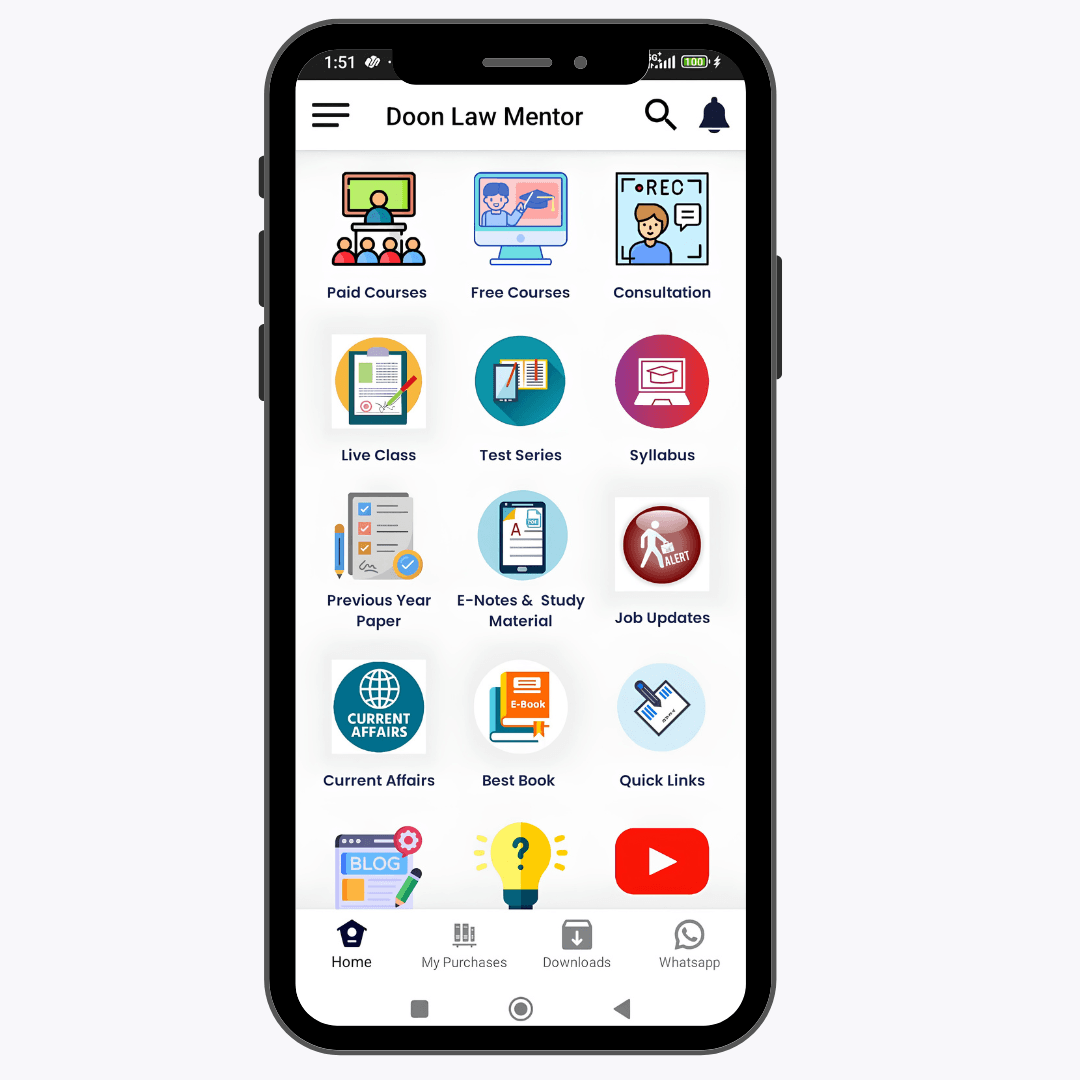
Access your UKAPO classes, notes, tests, free learning resources and preparation updates in one place.

CoursesTest SerieseBooks & NotesPreparation Updates
App-exclusive coupon code
DLMAPPUse at checkout for the app-exclusive offer
Get it on Google PlayDownload on the App Store
Personality test

UKAPO Interview at a Glance

Legal Knowledge

Current criminal law, procedure, evidence and state-specific law must be usable in conversation—not only remembered as notes.

Public-Service Suitability

The board can test fairness, judgment, prosecutorial responsibility, integrity and awareness of the justice system.

Communication

A good answer is clear, balanced and direct. Speaking for longer does not automatically make the answer stronger.

What the viva can assess

What the Personality Test Is Designed to Assess

Knowledge factors

  • Criminal-law fundamentals
  • Current legal developments
  • Uttarakhand-specific awareness
  • Role and ethics of a prosecutor

Personality factors

  • Clarity under pressure
  • Ability to listen before answering
  • Balanced judgment
  • Professional temperament
  • Honesty when uncertain
Your form becomes a question bank

Prepare Your Personal and Professional Profile

Profile areaQuestions you should be ready for
Hometown / districtGeography, local issues, institutions, notable features and current developments
Law college / universitySubjects liked, projects, internships, legal learning
Advocacy / employmentNature of work, professional learning, why prosecution service now
HobbiesActual depth of interest; avoid listing hobbies you cannot discuss naturally
Career motivationWhy APO, why public prosecution, what the role requires
Legal revision

Core Law Revision for the Viva

BNS

Ingredients of major offences, exceptions, participation, attempt, offences against body/women/property and important changes from IPC.

BNSS

Arrest, investigation, remand, bail, cognizance, charge, trial, judgment, appeal/revision and prosecution procedure.

BSA

Relevancy, confessions, dying declarations, burden, presumptions, documents/electronic evidence and witnesses.

Uttarakhand-specific viva

Uttarakhand Legal and Administrative Awareness

State legal systems

  • Uttarakhand Police Act, 2007
  • Revenue Police System
  • State prosecution structure
  • Major state institutions relevant to law/administration

State awareness

  • District / hometown issues
  • Geography and disaster context
  • Current governance/legal developments
  • Important state social issues
BNS · BNSS · BSA

New Criminal Codes — Viva Preparation

Know the change

Be able to identify a few major changes from IPC/CrPC/Evidence Act that matter operationally.

Know the reason

Understand what procedural or evidentiary problem a change attempts to address.

Know the prosecution impact

Explain how a change can affect investigation, charging, evidence presentation or trial management.

Prosecutor judgment

Case Law, Ethics and Situational Questions

“Is the prosecutor’s job to secure conviction?”

A prosecution officer represents the public interest and must assist a fair administration of justice. A strong response should distinguish vigorous prosecution from a conviction-at-all-costs mindset.

“What if an important witness changes the statement?”

Discuss the legal procedure, evidentiary treatment, available contradictions/corroboration and the prosecutor’s duty not to suppress unfavourable material.

“What if police evidence appears legally weak?”

Address objective assessment of admissibility/sufficiency, further lawful steps if available, and the prosecutor’s duty to the court.

Personal questions

Motivation Questions and Handling the Unknown

“Why APO?”

Build an answer around public prosecution, criminal justice, courtroom responsibility and your own legal trajectory—not salary/status slogans.

When you do not know

Say so briefly, or state the part you know with an explicit limitation. Inventing a legal rule is worse than acknowledging uncertainty.

Interview preparation should convert knowledge into judgment.

Revise the law, then practise how you would explain and apply it as a public prosecutor.

Explore UKAPO Preparation Options →
High-value viva practice

30 UKAPO Viva Practice Areas

Criminal Law

Homicide · hurt · sexual offences · property offences · general exceptions · common intention / participation · attempt · abetment · conspiracy · new BNS offences

Procedure & Evidence

Arrest · remand · bail · investigation · cognizance · charge · trial · appeal · confession · dying declaration · electronic evidence · burden · witnesses

Public Prosecution & State

Role of prosecutor · ethics · victim/accused rights · fair trial · Police Act · Revenue Police · Uttarakhand current affairs · hometown · profile · why APO

Final revision

A 7-Day Interview Revision Framework

DayFocus
1Profile, hometown, education, work and motivation
2BNS + major offence concepts
3BNSS + prosecution procedure
4BSA + electronic/documentary evidence
5Police Act + Revenue Police + Uttarakhand issues
6Current legal developments + situational/ethics questions
7Light revision + one final mock + rest/speaking discipline
Role understanding

Prepare “What Does an APO Actually Do?” Beyond a Textbook Definition

An Assistant Prosecution Officer represents the State in criminal proceedings, but the prosecutor’s duty is not simply to obtain conviction at any cost. Interview answers should reflect fairness, legality, assistance to the court, careful evaluation of evidence and respect for the rights of all parties.

Case Preparation

Understand the record, charges, evidence, witnesses and legal issues before court appearance.

Court Assistance

Present the State’s case accurately, respond to legal issues and assist the court toward a lawful result.

Ethical Duty

A prosecutor is a public officer and must not suppress material, misstate law or treat conviction as the only measure of success.

Mock evaluation

Score Every Mock Interview on the Same 6 Dimensions

DimensionWhat good performance looks like
Legal accuracyCorrect law with no invented section/case
ReasoningExplains why, not just what
ClarityDirect answer before detail
BalanceRecognises rights, duties and competing considerations
ComposureHandles follow-up and disagreement without defensiveness
IntegrityAdmits uncertainty instead of bluffing
Before the board

Treat Document Verification as Part of Interview Readiness

Keep originals and required copies organised well before the interview date. Recheck name/date consistency, category and domicile documents, academic records, application form and any certificate specifically asked by UKPSC. The exact list in the fresh call letter/instructions will control.

Do not rely on the previous cycle’s list as final.

Use earlier instructions to understand the process, but follow the current UKPSC interview/document-verification notice exactly when issued.

Speaking discipline

Interview Answers Should Usually Start Short and Expand Only When Asked

First Sentence

Give the direct answer or legal proposition.

Second Layer

Add one or two reasons, provisions or practical implications.

Follow-Up Layer

Expand only if the board probes deeper. This keeps answers controlled and reduces self-created traps.

30-day plan

A 30-Day UKAPO Interview Preparation Cycle

DaysFocus
1–7Profile dossier + BNS/BNSS/BSA rapid revision + prosecutor-role basics
8–14Uttarakhand legal/administrative topics + current affairs + district profile
15–21Situational questions + legal follow-ups + first formal mocks
22–26Weak-area repair + document check + second mock cycle
27–30Light revision, current updates, concise speaking practice and composure
Know the post you want

Prepare “What Does an APO Actually Do?” Beyond a Memorised Definition

A strong interview answer should show that you understand prosecution as a public function—not merely as “arguing cases for the State”. The prosecutor assists the court through fair presentation of the case, works with the criminal-justice record, evaluates evidence and legal issues, and must balance effective prosecution with fairness and the rights of all participants.

Case Assessment

Understand facts, charges, evidence, procedural history and legal weaknesses before taking a position.

Court Responsibility

Present the prosecution case firmly but fairly; a prosecutor is not expected to seek conviction at any cost.

Public-Service Role

Demonstrate integrity, independence of judgment, respect for law and sensitivity toward victims/witnesses while preserving due process.

Situational questions

Use a 5-Step Method for Ethical and Practical Interview Situations

StepHow to answer
1. Identify the legal/public-service issueState the conflict clearly—evidence, fairness, pressure, witness issue, procedural legality, etc.
2. State the controlling principleRefer to legality, prosecutorial fairness, court duty, statutory procedure or constitutional value.
3. Reject the improper shortcutBriefly explain why pressure, concealment, illegal procedure or unsupported prosecution is unacceptable.
4. Give a lawful practical responseExplain what you would verify, record, disclose, seek from the court or escalate through proper authority.
5. Close with institutional responsibilityShow that the solution protects both effective prosecution and the integrity of the justice process.
Interview discipline:

Do not rush into a moral slogan. Start by identifying the legal and institutional duty, then explain the practical response.

Current legal awareness

Maintain a Compact Current-Law File for the Interview

Criminal-law developments

Track significant Supreme Court/High Court decisions, implementation issues under BNS/BNSS/BSA, electronic evidence, arrest/bail, victim rights and prosecution-related procedural developments.

Uttarakhand developments

Track major state legal/governance issues, policing/prosecution developments, important High Court decisions and issues with clear public-law relevance.

Constitutional issues

Revise only major developments you can explain coherently—fundamental rights, criminal justice, federal/state administration, judicial review and public accountability.

How to record each issue

Keep a 5-line format: facts/context → legal issue → governing principle → current position → your balanced explanation.

Your DAF/profile is part of the syllabus

Build a Personal Profile Question Bank Before Mock Interviews

Profile areaLikely preparation questions
Hometown / districtGeography, administration, notable institutions, local legal/social issues, culture and current developments.
Law college / universitySubjects you liked, dissertation/project, legal interests and what shaped your career choice.
Work / advocacy experienceNature of work, ethical situations, court exposure, drafting/research, lessons relevant to prosecution service.
Hobbies / interestsBasic factual and analytical questions proving the hobby is genuine rather than decorative.
Why APO?A realistic motivation linked to prosecution/public service—not a generic “I want to serve society” line only.
Score mocks consistently

Evaluate Every Mock Interview on the Same 6 Dimensions

Legal Accuracy

Did you state current law correctly and avoid guessing section numbers?

Application

Could you move from rule to practical facts and prosecution judgment?

Clarity

Was the first answer concise enough for the panel to follow?

Composure

Did you remain steady under interruption, disagreement or an unknown question?

State Awareness

Could you explain Uttarakhand issues rather than only recite one-line facts?

Integrity / Judgment

Did your response show lawful, balanced and institutionally responsible decision-making?

After each mock, select only 3–5 changes for the next one. Trying to correct twenty speaking/content habits simultaneously usually produces an unnatural interview style.

Handling uncertainty

How to Handle a Question You Do Not Know

When the fact is unknown

Say politely that you are not certain rather than inventing a figure, case name or provision. If you know the broader principle, distinguish it from the unknown detail.

When the panel challenges your answer

Listen fully, reconsider the proposition and correct yourself if necessary. Defending an error merely to appear confident is worse than a measured correction.

Confidence is not certainty about everything.

For a legal-service interview, credibility includes knowing when to verify before stating a proposition as law.

Verification

Sources & Verification

  1. UKPSC Official WebsiteFinal authority for the fresh interview schedule, call letters and recruitment instructions.
  2. UKPSC APO Interview / Document Verification InstructionsOfficial UKPSC material from the preceding APO cycle.
  3. India CodeCurrent statutory texts for BNS, BNSS and BSA interview revision.
Student Results

UKPSC APO Student Success

Doon Law Mentor students have secured notable ranks in UKPSC APO.

Rank 27UKPSC APO
Rank 32UKPSC APO
Rank 48UKPSC APO
Questions aspirants ask

Uttarakhand APO Interview FAQs

When should I start interview preparation?

Basic current affairs, Uttarakhand awareness and speaking practice can start early; intensive mock work should increase after Mains.

Will the interview ask only law?

Do not assume that. Prepare law, prosecution role, Uttarakhand awareness, current affairs and your personal profile.

Should I memorise model answers?

No. Memorised answers often sound artificial. Build frameworks and practise natural, legally accurate responses.

What if I do not know an answer?

Acknowledge it briefly and avoid guessing. Interview credibility matters.