
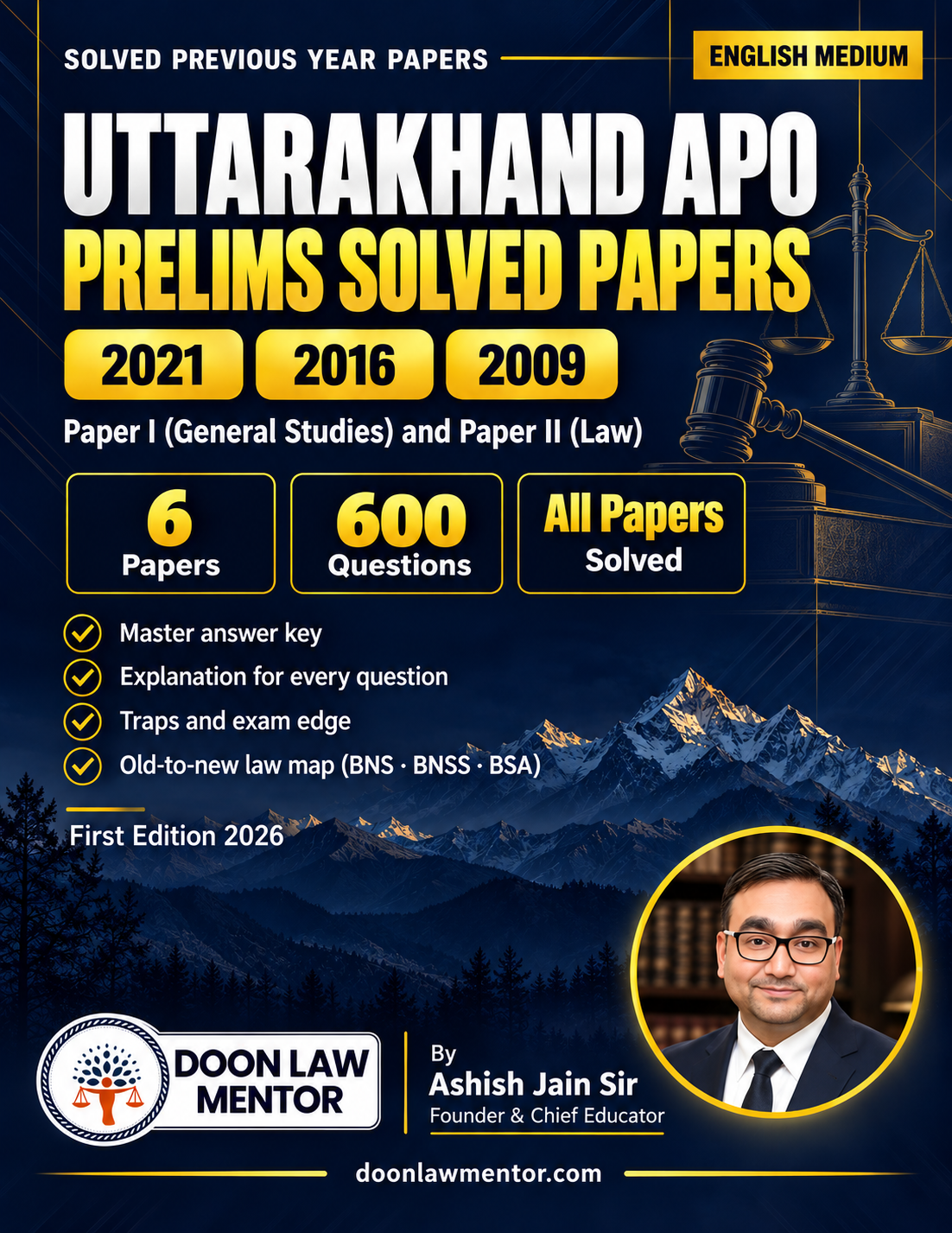
UKAPO Prelims Solved PYQs — English
Prelims PYQs with solutions and current-law revision.
₹99View eBook ↗
Build a smaller, current and exam-linked resource stack for UKAPO instead of collecting outdated books. Start with current bare Acts, official sources, PYQs and selective explanation.
For criminal law, your core must now reflect BNS, BNSS and BSA—not an old IPC/CrPC/Evidence-only book list.
Give each resource one job: current bare Act for exact law, one explanation source for difficult concepts, official material for state-specific facts, PYQs for examiner behaviour, concise notes for revision and mocks for retrieval under pressure.
Current statute / official source.
One reliable updated explanation where needed.
PYQs, MCQs, descriptive writing and timed mocks.
Use the current text of the Bharatiya Nyaya Sanhita, 2023, Bharatiya Nagarik Suraksha Sanhita, 2023 and Bharatiya Sakshya Adhiniyam, 2023. Old IPC/CrPC/Evidence material is useful only when mapped carefully to current provisions.
If a book explains only repealed-code section numbers without a reliable current-law map, prefer an updated source for primary UKAPO preparation.
The Police Act is a finite, high-return local-law area. Prepare definitions, organisation, duties/powers, accountability and Revenue Police references from the current Act text, then use notes only for explanation and revision.
Use one reliable base source for static topics, then verify changing facts from official State material. Keep monthly current affairs separate from your static notebook so the core remains revision-friendly.
Access your UKAPO classes, notes, tests, free learning resources and preparation updates in one place.


Choose material that supports grammar, vocabulary, essay, comprehension, précis/summary, translation, legal terminology, noting/drafting and office-letter practice. A theory-heavy book without timed writing is incomplete preparation.
After finishing a topic, check how UKPSC has tested it. PYQs tell you whether your resource is too broad, too shallow or misaligned. For older criminal-law questions, add the corresponding BNS/BNSS/BSA provision beside the old reference.
The free book-selection guidance and original question papers remain available. These are optional paid solved-answer eBooks.
Prelims PYQs with solutions and current-law revision.
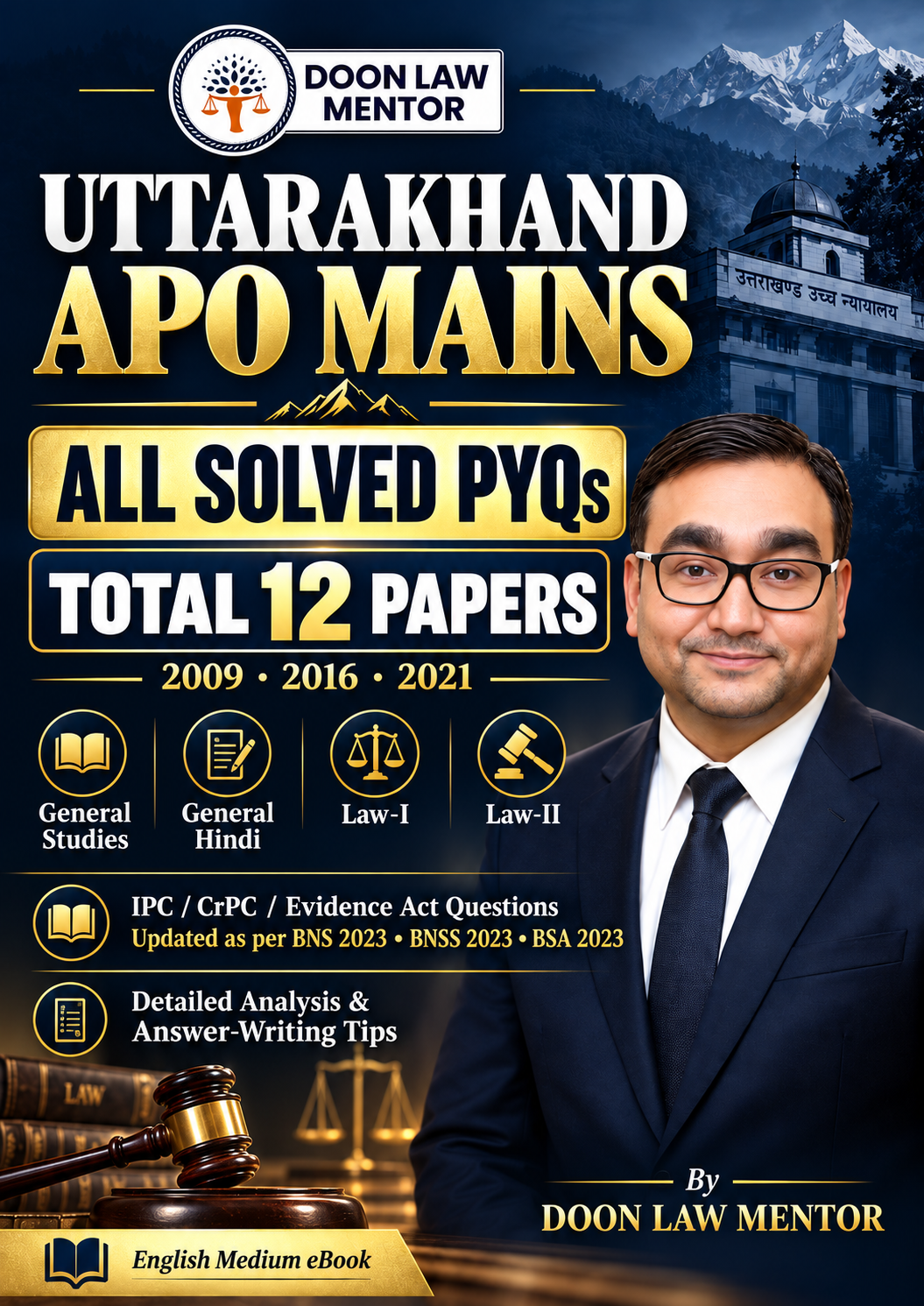
Mains PYQs solved across Law, General Studies and Language papers.
| Pass | Focus |
|---|---|
| 1 | Structure, chapters, definitions and core scheme |
| 2 | Ingredients, provisos, explanations and exceptions |
| 3 | Close-option distinctions, cross-references and frequently confused provisions |
Keep national/legal and Uttarakhand current affairs in dated monthly notes. Move only durable developments into your static notes. This prevents endless rewriting of a static GK book.
Does it reflect BNS/BNSS/BSA and current Uttarakhand law?
Does its depth match the UKAPO syllabus and PYQs?
Can you realistically revise it multiple times before the exam?
Use print when annotation and repeated bare-Act reading help you; use digital material for searchable updates and current affairs; use App notes/tests where regular updates and progress tracking matter. The format is secondary to accuracy and revision frequency.
| Question | If answer is No |
|---|---|
| Did I revise this resource this month? | It may be too large or duplicative. |
| Did it answer PYQ-level questions? | Depth may be wrong. |
| Is it legally current? | Replace/update it. |
| Does it create usable notes? | Change reading method. |
Every major reading block should finish with PYQs or fresh MCQs. If knowledge works only while the book is open, it has not yet become exam-ready recall.
Build a lean source stack, connect it with PYQs and test retention before buying another book.
None. Current bare Acts, official syllabus/PYQs and reliable updated explanation are the essential resource categories.
No. It may help conceptually, but your primary preparation must follow BNS and current-law mapping.
Prefer one dependable base source plus official verification and your own topic-wise notes.
Condensed statutory markings, error log, Uttarakhand-specific notes, PYQ patterns and previously attempted mocks.
Choose between complete preparation, a Prelims-focused recorded course and structured exam practice.
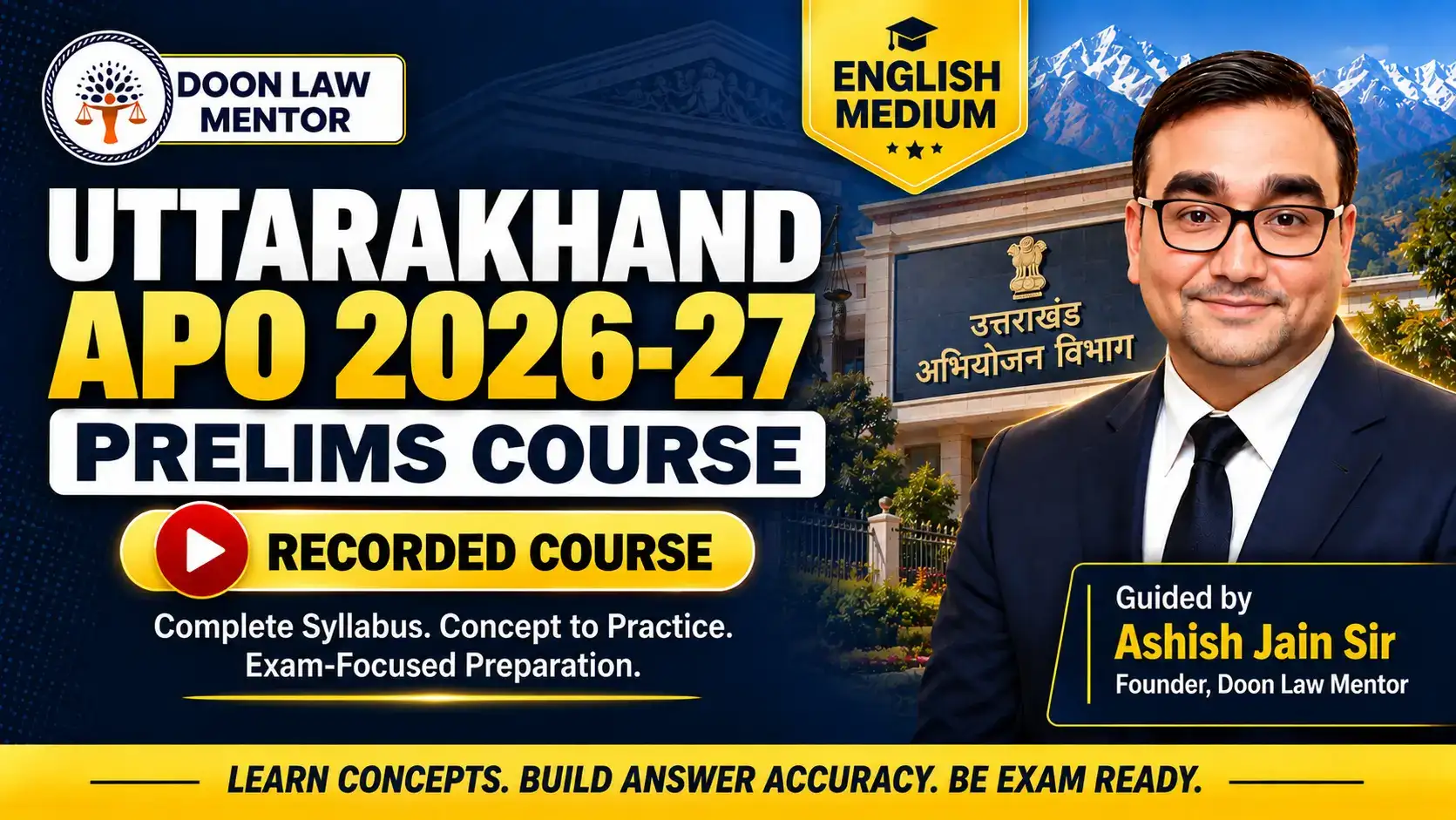
Focused recorded preparation with English-medium lectures and notes, Uttarakhand GK, General Studies and complete Prelims test practice.
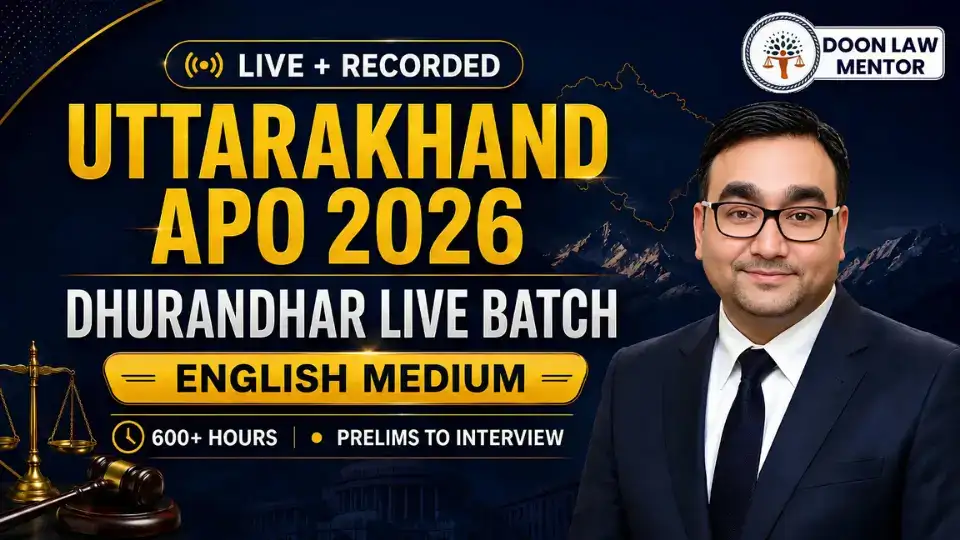
Complete English-medium preparation with live + recorded learning, English notes and structured guidance from Prelims to Interview.

Exam-oriented bilingual practice for aspirants who want to strengthen accuracy, speed, revision discipline and Prelims performance.

Use the Doon Law Mentor app for free learning resources and your enrolled classes, notes, tests and updates.
Book editions and publishers change over time. Use current statutes, the applicable UKPSC syllabus and official material as primary references, and choose commercial study material according to legal currency and exam relevance.